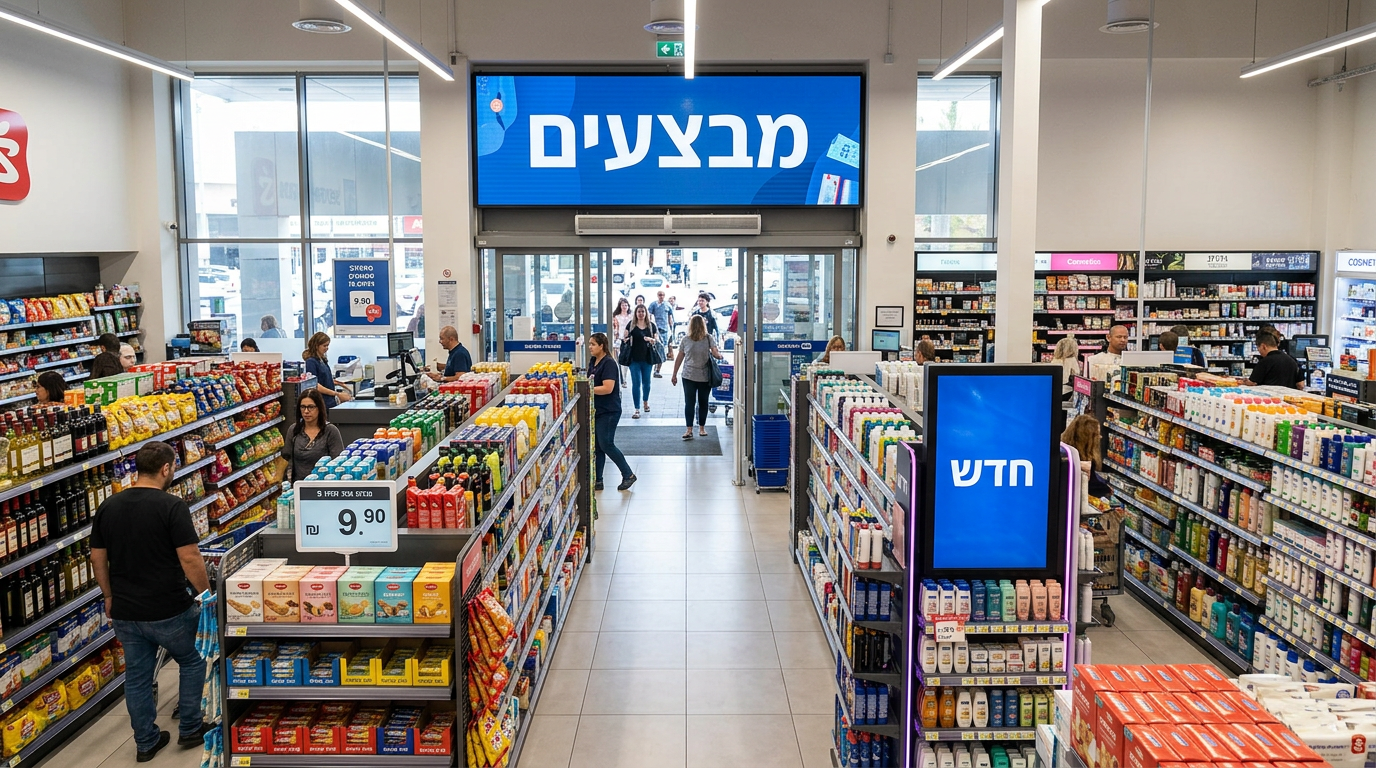
How much does digital signage cost? A full cost breakdown (2026)
What actually drives digital signage cost — screens, players, installation, CMS licensing and operations — and how to calculate ROI for a retail chain.

The first question we get is "how much does digital signage cost?". The answer comes down to four components, and once you understand them, budgeting a single store or a nationwide rollout becomes straightforward.
The four cost components
- Hardware — a commercial-grade display built for continuous operation, sometimes with an external media player.
- Installation — mounts, power and networking, on-site technician work.
- Software — CMS licensing to manage content, usually per screen per month.
- Operations — content design, business-system integrations, monitoring and support.
Why commercial screens, not consumer TVs
A consumer TV is designed for a few hours a day. Signage runs 12–24 hours, often with static content, which burns consumer panels within months. Commercial displays offer higher brightness, commercial warranty and continuous-operation support — a lower total cost over time.
What raises and lowers the price
| Factor | Effect on cost |
|---|---|
| Screen size and quantity | The single biggest budget driver |
| Indoor vs outdoor | Window/outdoor screens need high brightness and durability |
| Rollout vs pilot | Pilots reduce risk; scale reduces per-unit cost |
| ERP integration | One-off cost that pays back in manual work saved |
| Content change frequency | The more dynamic your content, the faster the payback |
Calculating ROI
Returns come from three places: print and labour savings on paper signage, uplift on promoted products, and fewer pricing errors. Chains we work with typically see payback within 12–24 months, with promo frequency as the main variable.
Frequently asked
Related solutions
Digital signage
Smart screens and central content management across every branch.
Electronic shelf labels
Automatic, real-time price updates on every shelf.
In-store advertising screens
Gondola heads, shelf toppers and window displays that update themselves.
Choosing a signage system
A capability table and the questions worth asking any vendor.
All solutions
Retail, clinics and shared spaces — one platform.
More articles
Digital Signage Systems in Israel: Cloud vs On-Prem and How to Choose a Vendor (2026)

Advertising Screens for Stores: The Complete Guide to Shelf Toppers and Gondola Screens (2026)