What is ESL? The complete guide to electronic shelf labels (2026)
A comprehensive guide to electronic shelf labels — how they work, how they integrate with your ERP, advantages over paper, and when they pay back.
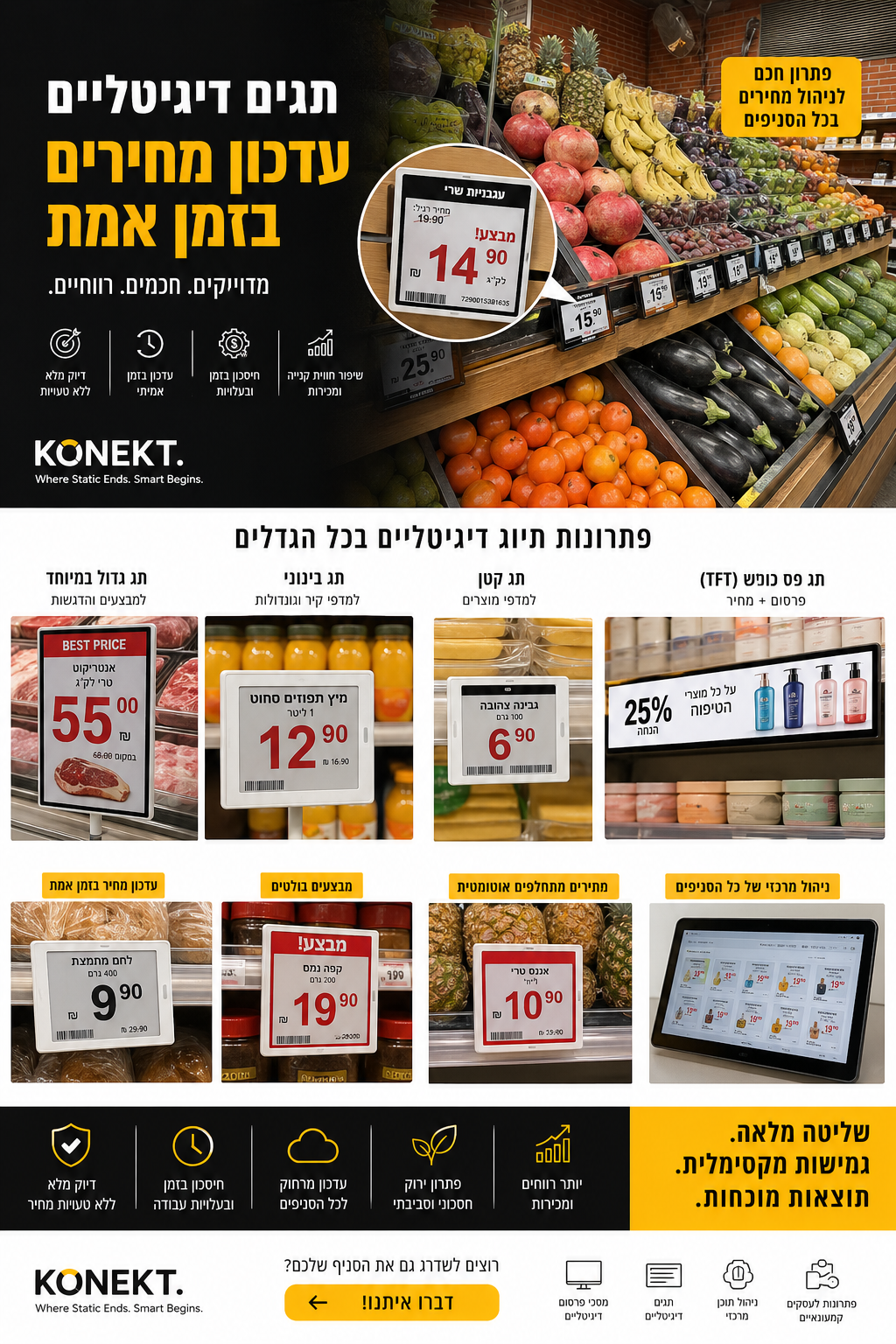
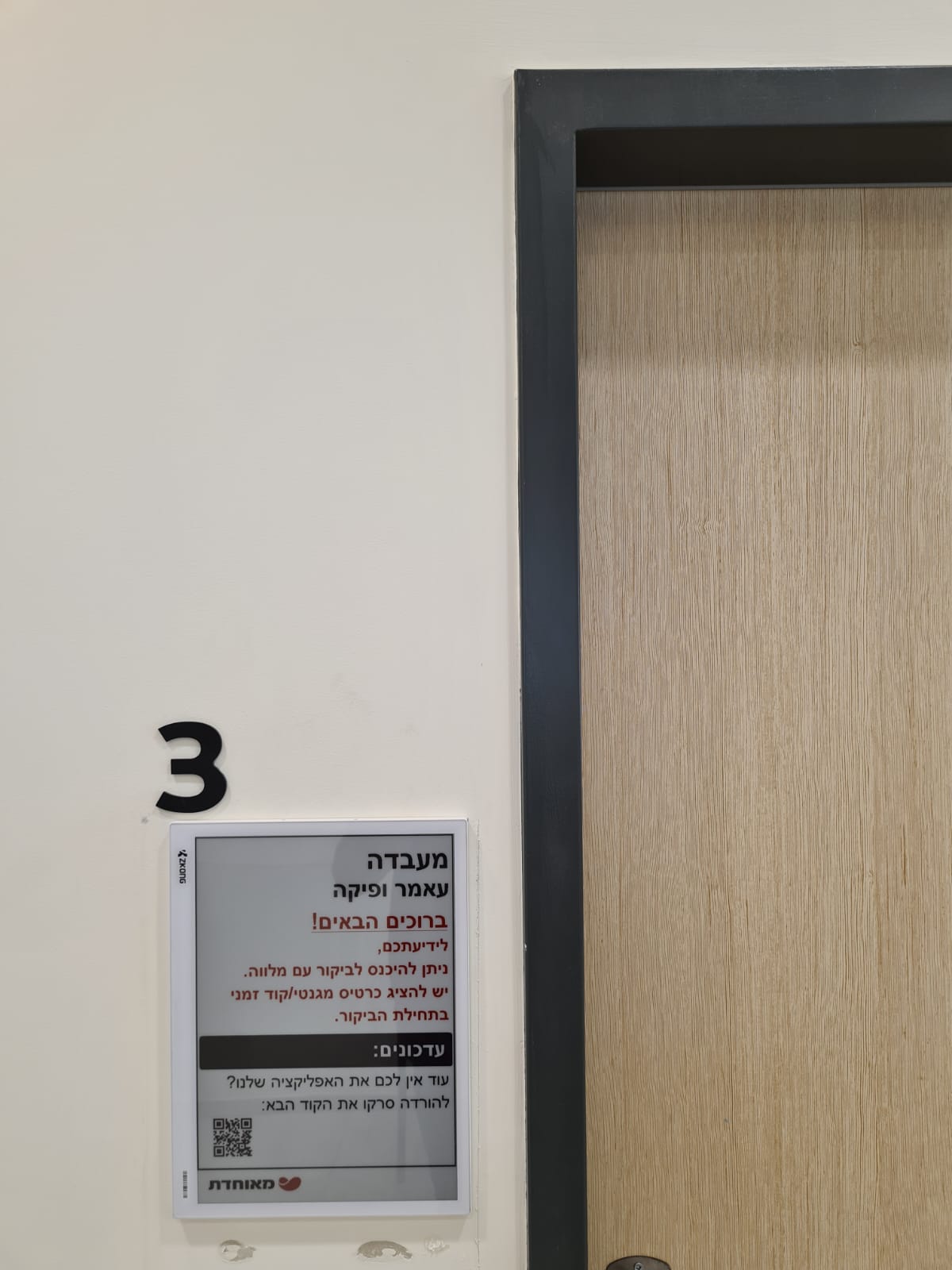
ESL — Electronic Shelf Labels — are digital price tags that replace printed labels on store shelves. Instead of printing hundreds of thousands of labels per week, the chain manages one pricing source that syncs in real time to every tag in every store.
What's inside an ESL tag?
- An e-paper display — readable in any lighting and consuming no power to keep static content on screen.
- Wireless radio (typically 2.4GHz on a power-efficient protocol).
- Battery rated for 5–10 years of normal use.
- Rugged housing with a shelf-locking mechanism.
How it works behind the scenes
- Your pricing system (ERP / category management) holds the canonical price.
- KONEKT's CMS syncs with the price source — it always knows what changed.
- The CMS pushes the change to gateways installed in the store.
- The gateway radios the update only to the affected tags.
- The tag wakes briefly, draws the new content and sleeps — huge battery savings.
Advantages over paper
| Criterion | Paper labels | ESL |
|---|---|---|
| Price update time | Days | Seconds |
| Shelf-to-POS accuracy | Frequent gaps | 100% |
| Long-term cost | Continuous printing | One-time investment |
| A/B promotion ability | Limited | Full & dynamic |
| Environmental impact | Lots of paper waste | Significantly greener |
When does it pay off?
As a rule of thumb, ESL starts paying back when a store handles 1,500–2,000 price changes per month. For a chain running weekly promotions, that's almost always within 18–24 months.
Frequently asked
Related solutions
Digital signage
Smart screens and central content management across every branch.
Electronic shelf labels
Automatic, real-time price updates on every shelf.
In-store advertising screens
Gondola heads, shelf toppers and window displays that update themselves.
Choosing a signage system
A capability table and the questions worth asking any vendor.
All solutions
Retail, clinics and shared spaces — one platform.