Core Differences: Digital vs. Traditional Static Signage
Discover the fundamental differences between digital signage and traditional methods. Learn how SMART KONEKT transforms retail with ESL and central CMS.
In today's fast-paced retail and service environment, the transition from static paper-based signage to Digital Signage solutions is more than an aesthetic choice—it's a strategic operational shift. SMART KONEKT leads this revolution in Israel, providing platforms that integrate menu boards, shelf-edge displays, and Electronic Shelf Labels (ESL) directly with organizational core systems.
Dynamism vs. Stagnation: Real-Time Content Updates
The most significant difference lies in the ability to change information instantly. With static signage, every price change or menu update requires design, printing, shipping, and physical installation by a branch employee. In contrast, KONEKT’s central CMS allows control over thousands of screens and labels with a single click from the headquarters.
- Static Signage: Requires days of preparation for minor changes.
- Digital Signage: Immediate updates for dayparting promotions.
- ESL: Full synchronization with ERP to prevent price discrepancies at the checkout.
Technical and Operational Comparison
| Feature | Static Signage (Traditional) | Digital Signage & ESL (KONEKT) |
|---|---|---|
| Response Speed | Slow (Printing & Logistics) | Instant (Remote) |
| Labor Costs | High (Manual handling) | Minimal (Full Automation) |
| Visual Experience | Fixed, No motion | Video, Animation, Dynamic Content |
| Data Accuracy | Risk of human error | Automatic DB Sync |
The ESL Revolution and Its Impact
Signage isn't just about large screens. SMART KONEKT’s Electronic Shelf Labels (ESL), based on e-paper technology, replace traditional paper stickers. Chains like 'Tiv Taam' and 'Mahsanei HaShuk' are already implementing these solutions to ensure absolute price consistency. Unlike static signage that fades or falls off, ESL tags feature long-life batteries and connect to branch gateways for seamless updates.
Real-World Applications in Israel
The differences are best demonstrated through our clients' implementations:
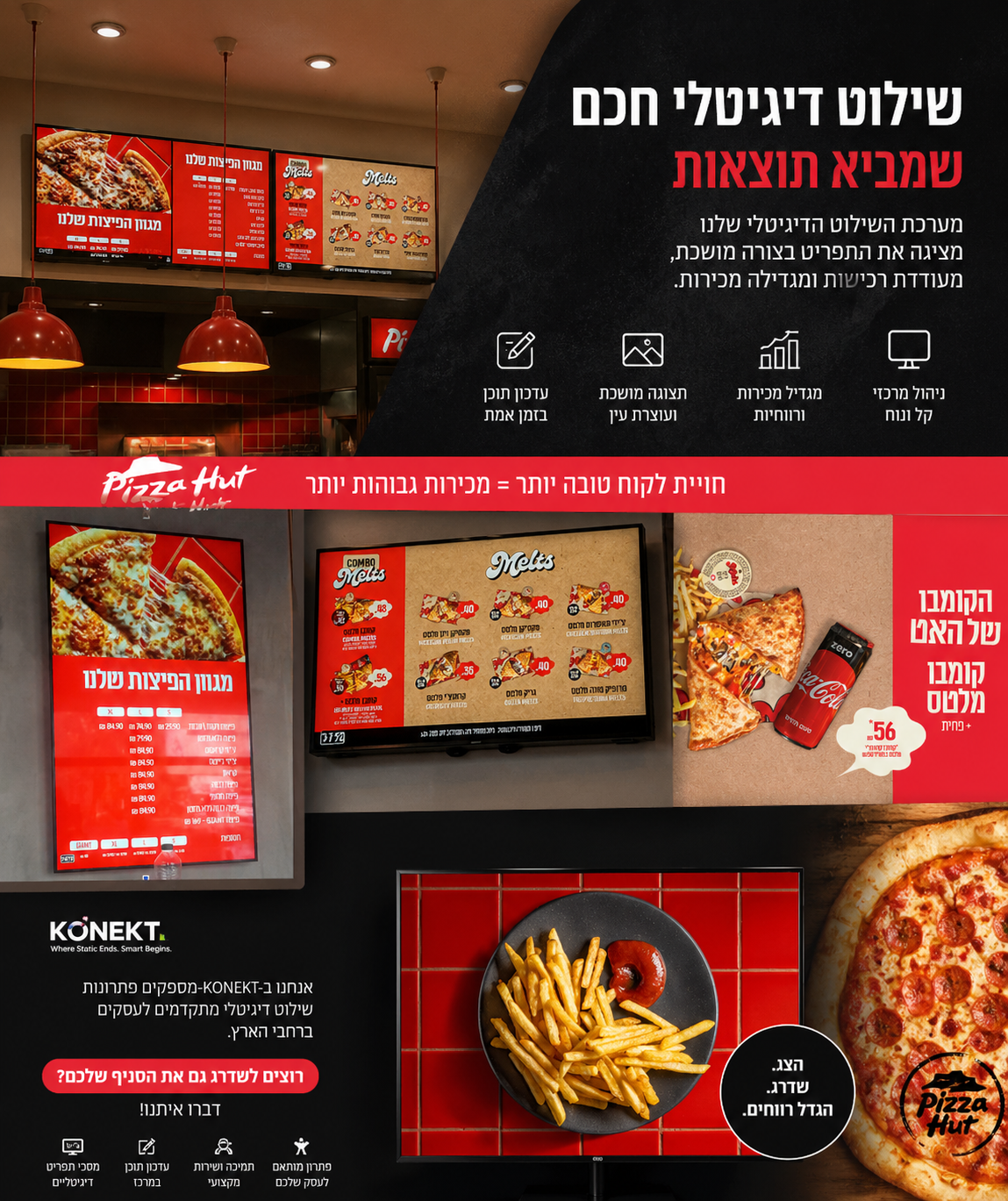
- Pizza Hut: Digital menu boards replacing plastic signs, allowing instant display of new product visuals.
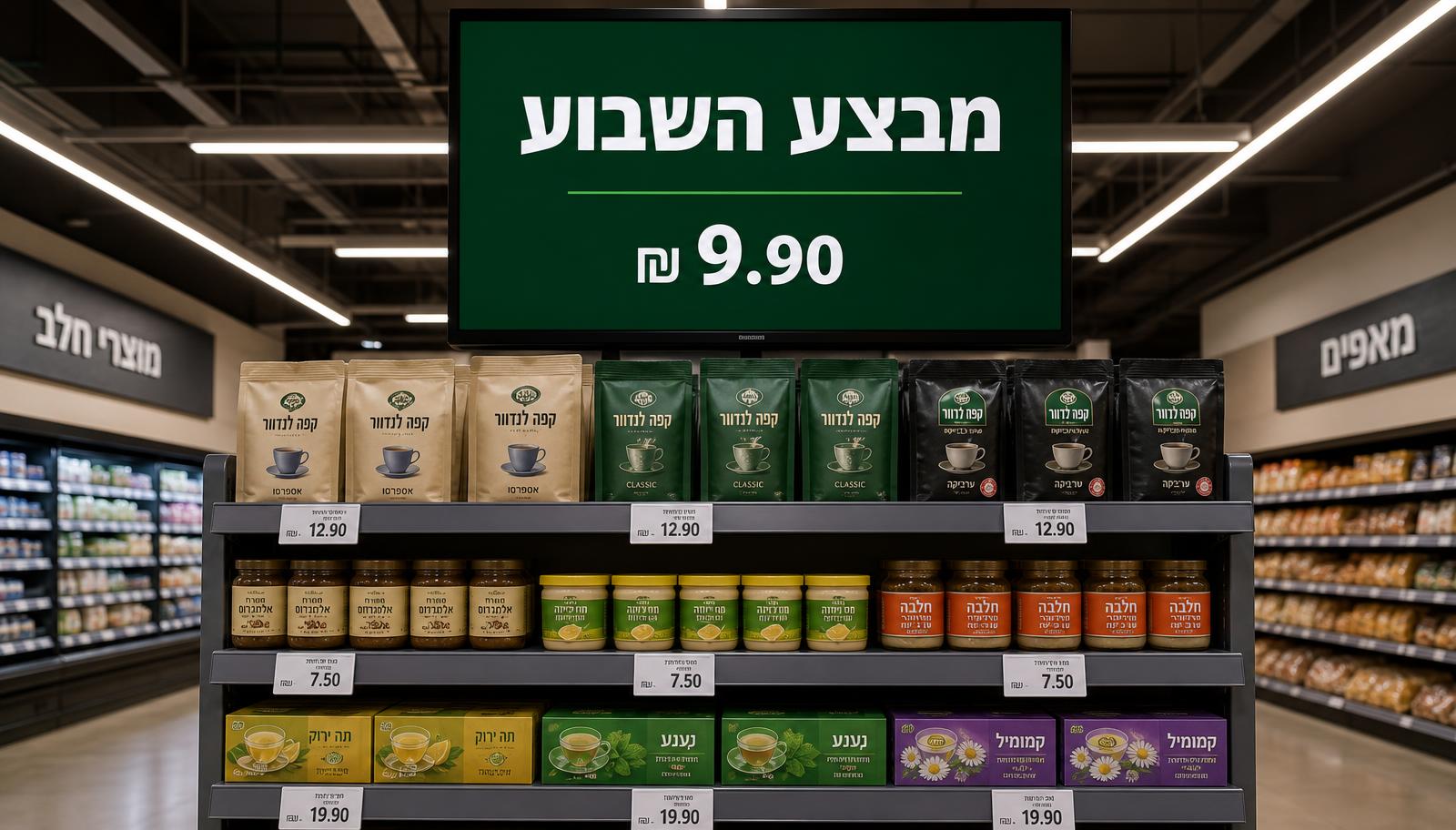
- Good Pharm: Utilizing shelf-talker screens and gondola-end displays to capture customer attention at the point of decision.
- Meuhedet: Over 100 door screens updating doctor names and queues in real-time.
- Tiv Taam: ESL deployment across 50 branches with remote monitoring, eliminating the need for manual label replacement.
Infrastructure Flexibility: ON-PREM and Remote Monitoring
A key difference is the ability to monitor signage health. Static signage can be damaged or outdated without management knowing. At SMART KONEKT, we offer ON-PREM installations (as seen at Tiv Taam) that include remote monitoring. The system alerts if a screen is off or a label is out of range—a level of control non-existent in the traditional world.
Frequently asked
Related solutions
Digital signage
Smart screens and central content management across every branch.
Electronic shelf labels
Automatic, real-time price updates on every shelf.
In-store advertising screens
Gondola heads, shelf toppers and window displays that update themselves.
Choosing a signage system
A capability table and the questions worth asking any vendor.
All solutions
Retail, clinics and shared spaces — one platform.